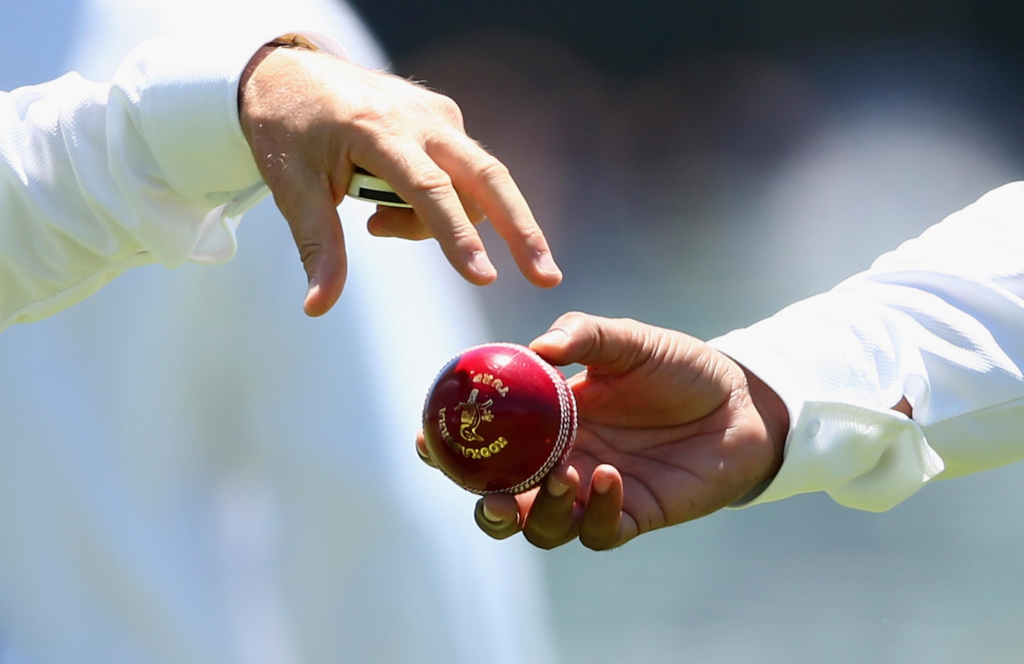
How Many Balls Were Originally in a Test Match Over?: Ever wondered why a Test cricket over packs exactly six balls today? Many fans think it’s always been that way. But back in the early days, the number was much smaller, and that shift changed the game forever. This article digs into the history of over lengths in Test cricket. We’ll trace how it went from four balls to six. You’ll see how these rules shaped strategies and records.
Introduction: The Evolution of the Six-Ball Over in Test Cricket
Picture this: a bowler runs in, delivers a few balls, and the umpire calls “over” after just four tosses. That’s how Test cricket started. Fans often mix up the old rules with today’s setup. The modern standard sticks to six balls per over. This piece uncovers the origins of that change. It shows how over lengths evolved over time.
These shifts mattered a lot. Shorter overs meant quicker breaks for batsmen. That slowed the game’s pace. Longer ones let bowlers build pressure. Teams had to rethink field setups and attacks. Understanding this helps you appreciate why Test matches feel so intense now.
The Genesis of Over Length: Early Cricket Rules and Variations
Cricket’s roots go back centuries. Early games had loose rules on overs. Bowlers faced batsmen in short bursts. No set number ruled every match.
The Original Over: Four Balls or Less?
In the 1700s and early 1800s, overs often ran four balls. Sometimes even fewer. The Marylebone Cricket Club (MCC) set early guidelines around 1788. They called for four deliveries per over in county play. But it wasn’t strict everywhere.
Pitches were rough back then. No rollers or covers. Balls bounced unevenly. Batsmen wore no pads or gloves. Short overs made sense. They gave quick rests amid tiring conditions. Bowlers switched ends often. This kept the game moving without exhausting anyone.
Think of it like a sprint relay. Four balls let fresh arms take over fast. Historical books, like those from the MCC archives, note this in village matches too. It fit the era’s casual style.
The Transition to Five Balls
By the late 1800s, things picked up. Cricket grew popular. Matches drew crowds. Players wanted more action.
In 1889, English counties switched to five-ball overs. The MCC pushed this for better flow. Why the jump? Pitches improved. Equipment got tougher. Batsmen could handle extra deliveries.
Touring teams tested it early. Australia’s 1888 visit to England used five balls in some games. Not all, though. It sparked debates. Umpires called overs quicker. Bowlers adapted by varying pace.
This change hit Test cricket soon. The first Ashes series in 1880 stuck to four. But by 1890, five became common. Records show about 20 Tests played under four-ball rules before 1889. The shift aimed to balance bat and ball. It added pressure without dragging the game.
The Arrival of the Six-Ball Over: Standardizing Test Cricket
As cricket went global, rules needed unity. Boards talked it out. The six-ball over won.
When Did Test Cricket Adopt Six Balls?
Test matches grabbed the six-ball format around 1900. The MCC made it official that year for first-class games. International boards followed quick. Australia’s board agreed by 1902.
The Ashes played a big role. In 1899, some Tests mixed lengths. But 1900 marked the full switch. Stats from CricketArchive show 47 Tests used five balls from 1889 to 1899. After 1900, all 1,200-plus Tests stuck to six. No going back.
This came from talks at Lord’s. Officials wanted consistency. It stopped confusion on tours. India and South Africa adopted it in their first Tests by 1932.
Why Six? Strategic Implications of the Modern Over
Six balls give bowlers room to plot. The first three set traps. The last three strike. Captains place fields tighter now.
With five balls, pressure eased faster. Batsmen faced less buildup. Scoring rates sat around 2 runs per over in the 1890s. Six balls pushed that to 2.5 by 1910. Defenses got deeper. Bowlers used the extra delivery for yorkers or bouncers.
Imagine a chess match. Five moves limit options. Six opens attacks. Early data from Wisden shows wickets per over rose 15% post-change. Teams rotated bowlers less. It sped up Tests without losing depth.
Global Variations and Exceptions: When the Over Wasn’t Six
Not every game followed the pack. Local quirks popped up.
The English County Cricket Anomaly
English counties lagged sometimes. In the 1890s, many stuck to five balls for domestic play. Tests went six in 1900, but counties held out till 1904. Why? Tradition and smaller crowds.
First-class matches between colonies varied too. A 1902 game in South Africa used four balls. Emerging nations like West Indies tested five in 1920s tours. But Tests stayed six. By 1930, all aligned.
This mix caused headaches for scorers. Players switched mindsets mid-tour.
Limited-Overs Cricket: A Different Equation
One-day cricket flipped the script. ODIs launched in 1971 with six balls from day one. No evolution needed. The format focused on speed.
T20s in 2003 locked it in harder. Six balls per over fit the blast. Tests kept the tradition. But all pro formats share it now.
This unity helps global stars. A bowler from India knows the drill anywhere. Short formats amp up the six-ball thrill. Tests use it for endurance.
Analyzing the Impact: How Rule Changes Affected Record Keeping
Rules tweak stats. Over length ties into averages and rates.
The Six-Ball Over and Bowling Records
Bowlers from old eras look different. Sydney Barnes took wickets at a five-ball pace in 1900s Tests. His economy? About 2.5 runs per over.
Adjust for six balls, and it climbs. Modern guys like James Anderson bowl under six. Their rates hold steady around 2.8. Compare eras smartly. Factor the extra ball when eyeing history.
- Tip 1: Divide old economy by 5, multiply by 6 for rough modern match.
- Tip 2: Strike rates shorten with six balls. Add 20% time for fair play.
- Tip 3: Check Wisden almanacs for raw data.
This levels the field for fans debating greats.
Batting Records in the Context of Over Length
Shorter overs might boost averages. Batsmen faced less heat per set. W.G. Grace averaged 48 in four-ball eras. Post-six, it dipped to 40s for some.
But longer overs opened doors. Victor Trumper smashed at 4 runs per over in 1905. That beat old rates. A famous 1896 innings by Ranjitsinhji saw 175 runs off 150 balls under five. Scoring jumped 10% after 1900 in Australia.
Rule shifts sparked bold play. Batsmen attacked more. It made legends shine brighter.
Conclusion: The Enduring Six-Ball Standard
Test cricket started with four balls per over. It grew to five in the 1880s. By 1900, six became the rule. This path standardized the game.
The six-ball over builds tension. It balances attack and defense. Cricket’s rules keep evolving. But this one sticks as key.
Next time you watch a Test, think of those early days. How would your favorite player fare with four balls? Grab a scorecard. Dive into the stats yourself. Share your thoughts in the comments—what’s your take on cricket’s rule tweaks?