Table of Contents
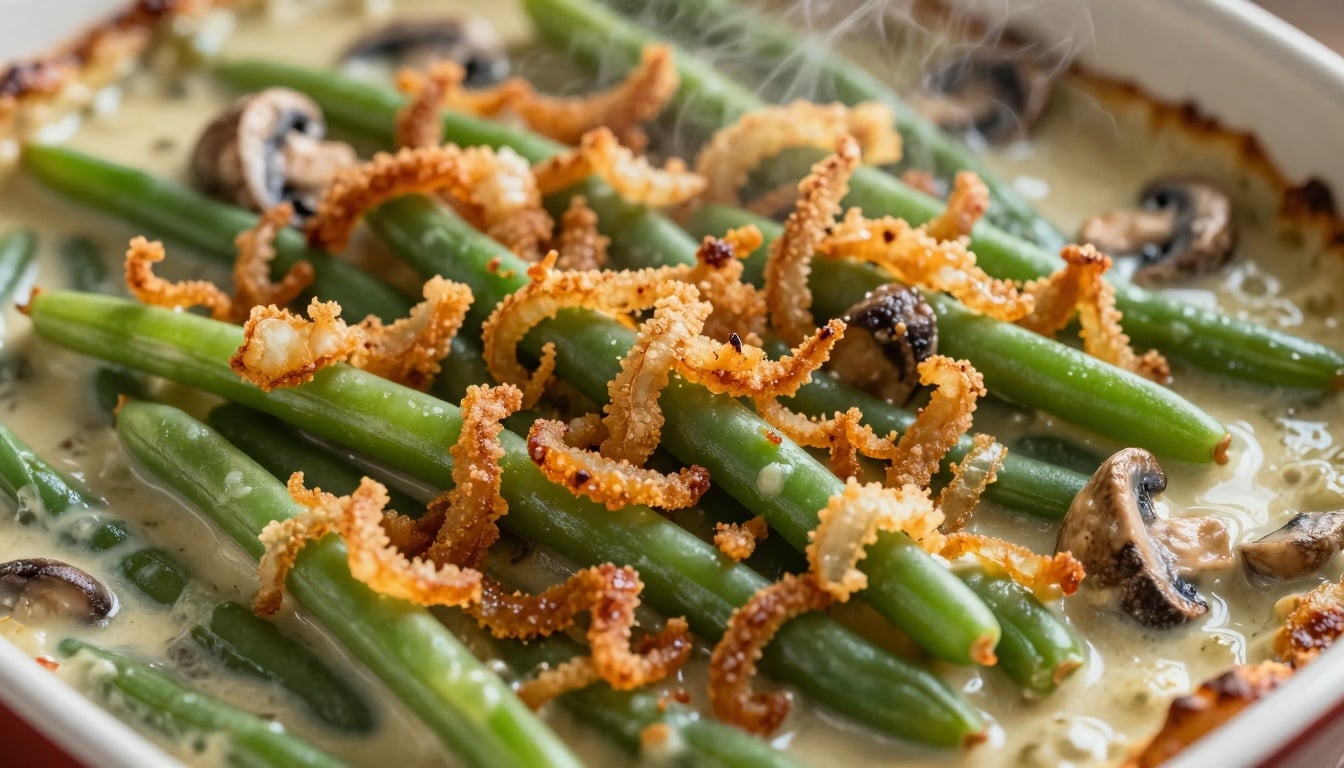
Few dishes stir up holiday memories like green bean casserole. You know the one—creamy beans topped with crunchy onions, fresh from the oven. It shows up at Thanksgiving tables year after year, a warm hug in food form. Some folks love it. Others call it old-school. But its pull stays strong.
This guide dives deep into green bean casserole. We go past the basic canned recipe. You’ll learn its story, key parts, and ways to make it shine. Get tips for better taste and crunch. Whether you’re a first-timer or a pro, you’ll end up with a dish everyone raves about.
A Look Back: The Surprising History of Green Bean Casserole
The Birth of a Classic: Campbell’s and the Cream of Mushroom Soup Connection
Green bean casserole started in 1955. Dorcas Reilly worked at Campbell Soup Company. She mixed green beans, cream of mushroom soup, and soy sauce. Then she topped it with fried onions from French’s. It hit kitchens fast. Busy cooks loved the ease—just three cans and a topping. No fuss, big flavor.
That simple mix caught on quick. By the 1960s, millions made it each year. The original green bean casserole recipe used everyday items. Canned soup bound it all. Beans added snap. Onions brought crunch. It fit the post-war rush for quick meals. Reilly called it a “happy accident.” But it shaped holiday sides forever.
Search for the “original Campbell’s green bean casserole recipe,” and you’ll see why it lasts. Low cost and short prep time sealed the deal. Families across America grabbed it for potlucks and feasts.
Evolution Over Decades: From Basic Sides to Culinary Centerpiece
Over time, green bean casserole changed. Home cooks swapped cans for fresh beans in the 1970s. They wanted more bite. By the 80s, cheese sneaked in for extra creaminess. Gourmet twists popped up in the 90s—think bacon bits or almonds.
Today, it’s more than a side. Chefs turn it into mains with added proteins. Vegan versions use plant-based soups. The core stays, but upgrades keep it fresh. French’s still sells billions of onion cans yearly. That’s proof of its staying power.
From humble roots to fancy plates, green bean casserole adapts. It honors the past while fitting new tastes.
Mastering the Core Components: Beyond the Can
Selecting the Best Green Beans: Fresh vs. Frozen vs. Canned
Pick your green beans right for the best green bean casserole. Fresh ones taste bright. Trim the ends. Blanch them in boiling water for two minutes. Then shock in ice water. This keeps color and crunch.
Frozen beans work great too. They blanch before freezing, so skip that step. Just thaw and drain. Canned beans save time but can get mushy. Rinse them well to cut salt.
Here’s a quick chart to compare:
| Type | Prep Time | Texture Result |
|---|---|---|
| Fresh | 10 mins | Crisp, vibrant |
| Frozen | 5 mins | Firm, consistent |
| Canned | 2 mins | Soft, convenient |
Fresh or frozen beat canned for texture in most recipes. They hold up in the bake. Canned fit rushed days. Test what suits your crowd.
The Crucial Role of Cream of Mushroom Soup
Cream of mushroom soup ties the green bean casserole together. It carries savory notes. Binds beans without gluey feel. Adds just enough moisture for creaminess.
But some skip the can. Make a homemade version instead. Sauté mushrooms in butter. Stir in flour for roux. Add milk and broth. Season with thyme. It takes 15 minutes but tastes richer.
For a quick sub, mix béchamel sauce with chopped mushrooms. Blend smooth. Use the same amount as canned—about 10 ounces per six servings. This fixes that “homemade cream of mushroom soup substitute for casserole” worry. You get control over salt and add-ins like garlic.
The Iconic Crispy Topping: Fried Onions Perfected
Crunch makes green bean casserole pop. Fried onions deliver that hit. Don’t bury them under sauce. Bake half in the casserole. Add the rest near the end.
For homemade, slice onions thin. Coat in flour and buttermilk. Fry in oil till golden. Or use shallots for a milder twist. They crisp up nice.
Food Network pros suggest mixing panko crumbs with melted butter. Sprinkle over onions. Bake at 375°F for 10 minutes. It adds extra bite without sogginess. Keep that topping crisp—it’s the star.
Elevating the Flavor Profile: Gourmet Upgrades
Adding Depth with Umami Boosters
Boost your green bean casserole with umami. A splash of Worcestershire sauce amps savoriness. Try one teaspoon per six servings. It cuts through cream without overpowering.
Dry sherry works wonders too. Deglaze the pan after sautéing mushrooms. Two tablespoons add nutty depth. Dijon mustard—half a teaspoon—brings tang. Stir it into the soup base.
Truffle oil? A few drops at the end. It elevates without dominating. These tweaks turn basic into gourmet green bean casserole recipe. Taste as you go. Balance keeps the classic vibe.
Incorporating Fresh Aromatics and Textures
Fresh aromatics lift the dish. Sauté garlic and shallots first. Heat oil in a pan. Cook till soft, about three minutes. This kills raw bite.
Add sliced mushrooms too. Brown them for earthy notes. Mix into the bean-soup blend. It builds layers. Skip raw adds—they steam out flavor.
For texture, toss in water chestnuts. Chop and stir in. They crunch like the onions. Or try slivered almonds for nutty pop. These steps make your casserole stand out at the table.
Cheese: The Unexpected Addition
Cheese melts into green bean casserole magic. Gruyère adds nutty melt. Shred one cup. Mix half into the base. Sprinkle the rest on top.
Sharp white cheddar brings bite. Use for a bolder taste. Stir it all in before baking. It thickens without extra soup.
Add cheese late in the recipe. Too early, and it separates. Bake till bubbly. This unexpected twist wins over picky eaters.
Troubleshooting Common Green Bean Casserole Pitfalls
Preventing the Soggy Bottom and Watery Filling
Soggy green bean casserole ruins the meal. Blame over-blanched beans or watery soup. Fresh beans release less liquid if prepped right. Pat dry after blanching.
Drain canned beans twice. Press with a towel. Reduce soup by a quarter cup. It thickens the fill.
Assemble ahead? Cool the mix fully. Top later. Reheat at 350°F covered, then uncover for crunch. These fixes keep it firm.
Achieving the Perfect Golden-Brown Topping
Burnt edges? Soggy top? Fix the bake. Start covered at 350°F for 20 minutes. Uncover for 10 more. Watch close.
Broil for two minutes if needed. Keep the dish six inches from heat. Turn once for even brown.
Bake toppings separate on a sheet. Add post-casserole bake. This method nails golden without char.
Conclusion: The Legacy Continues
Green bean casserole blends tradition and tweaks. Control moisture for firm base. Layer umami for depth. Nail the crunchy top every time.
Key steps: Drain beans well, add boosters like Worcestershire, and bake onions smart. Honor the 1955 roots, but make it yours.
Try these tips this holiday. Your table will thank you. Share your version—what’s your favorite upgrade?