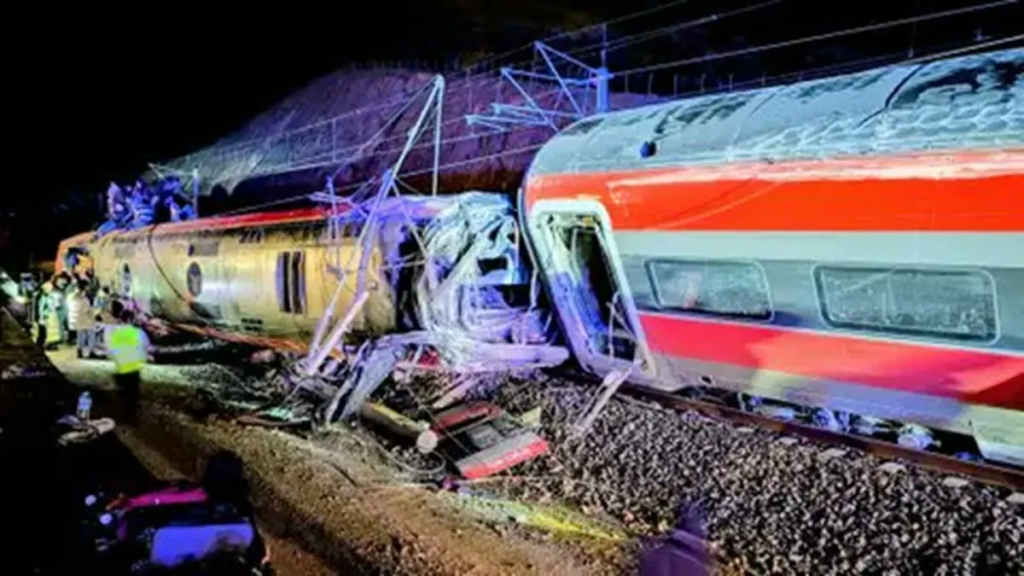
A massive rescue operation is entering its second day in southern Spain following one of the most severe high-speed rail disasters in European history. On the evening of Sunday, January 18, 2026, two high-speed trains carrying approximately 500 passengers collided near the town of Adamuz in Córdoba province. The incident has left the nation in a state of mourning and triggered an urgent investigation into the safety protocols of Spain’s renowned rail network.
1. Casualty Update and Hospital Status
As of Monday morning, January 19, Spanish interior ministry officials and regional authorities have confirmed at least 24 fatalities. The toll is expected to fluctuate as emergency crews continue to clear the wreckage of the Renfe train, which bore the brunt of the impact.
Confirmed Totals:
- Deceased: 24+ (including the driver of the Renfe train).
- Injured: 245 people.
- Critical Condition: 15 passengers currently in intensive care at hospitals in Córdoba and Jaén.
- Psychological Support: 170 individuals treated for minor injuries and shock.
2. Collision Timeline: The Adamuz Incident
The accident occurred at approximately 7:39 PM CET on a stretch of the Madrid-Seville high-speed line. The sequence of events unfolded with terrifying speed:
The Derailment: A private Iryo train (Frecciarossa 1000) traveling from Málaga to Madrid with 317 passengers experienced a sudden derailment shortly after passing through a railroad switch near Córdoba-Julio Anguita station.
The Impact: The rear carriages of the Iryo train jumped the rails and swung onto the adjacent track. At that precise moment, a state-owned Renfe train (Class 120) traveling from Madrid to Huelva in the opposite direction struck the derailed Iryo coaches at high speed.
The Aftermath: The impact forced the first two carriages of the Renfe train off the track, sending them plunging down a four-meter (13-foot) embankment. Survivors described the sensation as an “earthquake” followed by total darkness and smoke.
3. The Investigation: The “Straight Track” Mystery
Transport Minister Óscar Puente has characterized the accident as “truly strange,” focusing the investigation on a specific technical anomaly.
The collision happened on a straight section of track that was recently refurbished in May 2025 as part of a €700 million investment project. Authorities are currently examining:
- The Switch Mechanism: Why the Iryo train crossed into the path of oncoming traffic despite modern signaling.
- Rolling Stock: The Iryo train was less than four years old and had passed all recent safety inspections.
- Speed Data: Black box recorders are being recovered to determine if the trains were operating within the limits of the automated signaling system.
4. National and International Reactions
The disaster has drawn messages of solidarity from across the globe.
King Felipe VI and Queen Letizia: Issued a statement expressing “heartfelt condolences to the relatives and loved ones of the dead” and monitoring the situation with “great concern.”
Prime Minister Pedro Sánchez: “Tonight is one of deep sadness for our country. We are working with emergency services to ensure all affected families receive the support they need.”
European Commission: President Ursula von der Leyen confirmed she is following the “terrible news” and offered European assistance for the investigation.
5. Travel Alert and Frequently Asked Questions (FAQs)
Q1: Are trains running between Madrid and Andalusia today? No. All high-speed rail services between Madrid and the cities of Seville, Málaga, Córdoba, and Huelva have been suspended for the duration of January 19, 2026. Travelers are advised to check with Renfe or Iryo for refund or rescheduling options.
Q2: Which train was safer in the collision? The Iryo train (Málaga-Madrid) remained largely on the track bed, and its passengers were evacuated within hours. The Renfe train (Madrid-Huelva) suffered the most catastrophic damage, with carriages falling down an embankment, making rescue efforts significantly harder.
Q3: Is Spain’s high-speed rail network still safe? Spain operates the second-longest high-speed network in the world with an excellent safety record. This is the first major high-speed collision since the 2013 Santiago de Compostela derailment, and authorities have vowed a transparent inquiry to prevent a recurrence.
Conclusion: A Long Recovery Ahead
As the Military Emergencies Unit (UME) assists local firefighters in the recovery phase, the focus shifts to the survivors. Reception centers have been established at Atocha (Madrid), Seville, and Málaga stations to support the hundreds of families affected by a tragedy that has shattered the security of Spain’s most vital transport corridor.