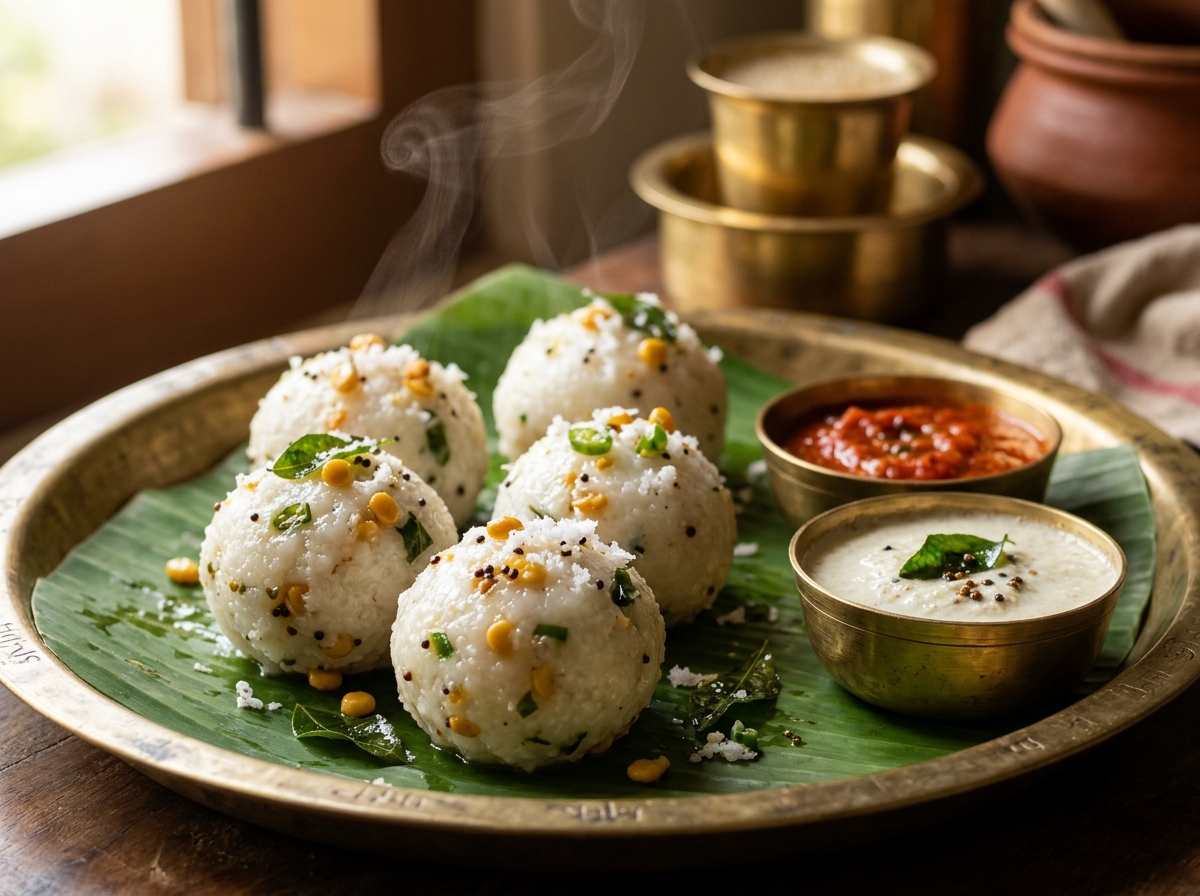
⚡ Direct Answer: How to Make Soft Uppu Urundai (Cheat Sheet)
The Golden Ratio: Soak 1 cup Idli Rice for 2 hours, then grind with 1.5 cups water into a coarse, rava-like batter. Temper mustard seeds, chana dal (for crunch), ginger, green chilies, hing, and curry leaves in 1 tbsp sesame oil. Stir batter into the pan over low heat for 3 to 5 minutes until a glossy, non-sticky ball forms. Fold in ⅓ cup fresh coconut, shape into lemon-sized balls, and steam for 10 to 12 minutes.
If you grew up in a South Indian household, few sounds evoke warm nostalgic memories quite like the gentle whistle of an idli steamer in the late afternoon, accompanied by the intoxicating aroma of mustard seeds crackling in pure cold-pressed gingelly oil, fresh curry leaves, and toasted chana dal. Uppu Urundai (also lovingly called Uppu Kozhukattai or Kara Kozhukattai) is the quintessential Tamil comfort food — humble, wholesome, and deeply satisfying.
Unlike store-bought processed snacks or deep-fried teasers, Uppu Urundai is completely oil-free in its final cooking stage. Each bite delivers a tender, melt-in-the-mouth texture punctuated by the nutty crunch of roasted lentils, the warm kick of fresh ginger and green chilies, and the sweet richness of fresh coconut. In this detailed master guide, we explore both the ancestral soaked-rice grinding method (which yields the softest texture) and the quick 15-minute rice flour method for busy weekday mornings.
Soaked Rice vs. Rice Flour: Which Method Is Better?
While modern adaptations frequently rely on store-bought rice flour or idiyappam flour, grandmother kitchens across Chettinad and Kongu Nadu fiercely advocate for soaking whole rice. Here is how the two methods compare scientifically:
| Feature | Traditional Soaked Rice Method | Instant Rice Flour Method |
|---|---|---|
| Texture | Ultra-soft, melt-in-mouth with subtle rava-like grain | Slightly denser and firmer chewy dumpling |
| Prep Time | 2 hours soaking + 5 minutes blender pulse | Zero soaking, ready to mix in 2 minutes |
| Moisture Retention | Stays pillow-soft for 12 hours without drying out | Must be eaten immediately or dumplings turn firm |
| Our Verdict | ★ Best for weekend brunch and authentic flavor | Great shortcut when pressed for time |
Culinary Science: The Secret to Perfectly Soft Uppu Urundai
Ever made steamed dumplings that turned into hard, rubbery golf balls? The secret lies in understanding starch pre-gelatinization:
- The Coarse Rava Grind: When blending the soaked rice, do not run the mixer into a baby-food puree. Stop when the batter feels like fine semolina (rava) between your fingers. These microscopic granules allow steam to penetrate deeply and hydrate every starch particle evenly during steaming.
- Do Not Overcook on the Stovetop: The stovetop pan-cooking step is only meant to thicken the batter into a workable dough mass. As soon as the dough stops sticking to the pan and forms a cohesive ball (3 to 5 minutes), pull it off the flame! If you cook out all the moisture on the stove, the dumplings will turn rock-hard during the subsequent steaming.
- The Steam Chamber Rest: Once the 10-minute steam cycle finishes, never rip the lid off instantly. Let the pot sit undisturbed off the burner for 2 minutes. This brief resting phase allows the internal steam pressure to equalize, preventing moisture loss and ensuring a glistening, pearl-like surface.

Authentic Uppu Urundai Recipe (Soft Steamed Rice Dumplings / Uppu Kozhukattai)
Ingredients
Rice Base
- 1 cup idli rice or raw rice (pacharisi) soaked in water for 2 hours and drained
- 1 ½ to 1 ¾ cups water for grinding into a coarse rava-like batter
- ¾ teaspoon sea salt or rock salt adjust to taste
Tempering & Aromatics (Thaalippu)
- 1 tablespoon sesame oil (nallennai) or coconut oil for authentic fragrance
- 1 teaspoon mustard seeds (kadugu) black mustard
- 1 tablespoon chana dal (bengal gram) adds an irresistible nutty crunch
- 1 teaspoon urad dal (split white gram) for texture
- 2 medium green chilies finely minced
- 1 piece fresh ginger (1 inch) finely grated or minced
- 2 sprigs fresh curry leaves (karuveppilai) finely torn or chopped
- ¼ teaspoon asafoetida (hing / perungayam) use gluten-free if strictly GF
- ⅓ cup freshly grated coconut (thengai thuruval) sweet and juicy
Instructions
Soaking & Grinding Rice
- Rinse 1 cup idli rice or raw rice thoroughly under running water until clear. Soak in fresh water for 2 hours.
- Drain the water completely. Transfer soaked rice to a blender jar with ¾ tsp salt and 1 ½ cups water. Pulse into a slightly grainy, coarse rava-like batter (not ultra-smooth like dosa batter, but fine semolina texture).
Tempering & Cooking the Dough
- Heat 1 tbsp sesame oil or coconut oil in a wide heavy-bottomed kadai or non-stick pan over medium heat. Add mustard seeds and let them crackle vigorously.
- Add chana dal and urad dal. Saute on low-medium flame until both lentils turn golden brown and nutty aromatic.
- Toss in minced green chilies, grated ginger, fresh curry leaves, and asafoetida. Saute for 30 seconds until fragrant.
- Pour the ground rice batter into the pan while stirring continuously to prevent lumps. Lower heat to medium-low. Keep stirring gently; the batter will absorb the liquid and thicken rapidly within 3 to 5 minutes into a glossy, non-sticky mass that pulls cleanly away from the sides of the pan.
- Fold in the freshly grated coconut, mix well, and switch off the flame. Cover the pan with a lid and let the dough rest for 5 minutes until it is comfortable to handle.
Shaping & Steaming to Perfection
- Grease your palms lightly with sesame oil. Pinch small lemon-sized portions of the warm dough and roll gently between your palms into smooth round balls (approx. 20-22 balls). Do not press too hard.
- Grease an idli steamer plate or steamer basket with a drop of oil. Arrange the balls with a tiny gap between each so steam circulates freely.
- Bring water to a rapid boil in your steamer pot or idli cooker. Place the plate inside, cover tightly with the lid, and steam on high flame for 10 to 12 minutes.
- Turn off heat. Let the steamer sit closed for 2 minutes before opening. The Uppu Urundai will look glossy, firm to the touch, and non-sticky. Serve steaming hot with spicy coconut chutney or tomato kara chutney!
Chef’s Pro-Tips for Success
- Use Chana Dal Generously: Chana dal is not merely a garnish here; it is the textural hero. Roasting the dal in oil until deep golden gives each bite a delightful contrasting crunch against the pillow-soft steamed rice.
- Do Not Skip Fresh Coconut: Grated coconut infuses natural oils into the dough as it steams, creating a luscious mouthfeel without needing butter or excess oil. Always use freshly grated coconut rather than dry desiccated shreds.
- Shape with Light Hands: When rolling the warm dough into balls, roll gently between greased palms. Compacting or pressing the dough tightly will make the urundai dense and heavy.
- Piping Hot Serving: Uppu Urundai is best enjoyed straight from the steamer with a fiery red tomato-garlic kara chutney, a dollop of fresh coconut chutney, or a sprinkle of fragrant spicy idli podi drizzled with gingelly oil.
Frequently Asked Questions about Uppu Urundai
What is Uppu Urundai made of?
Uppu Urundai (also known as Uppu Kozhukattai or Kara Kozhukattai) is a traditional South Indian steamed snack made of soaked raw rice or idli rice ground to a coarse rava texture, cooked with a flavorful tempering of mustard seeds, chana dal, urad dal, green chilies, ginger, curry leaves, and fresh grated coconut, then rolled into balls and steamed.
Why are my Uppu Urundai hard or rubbery?
Uppu Urundai turns hard if the rice dough is overcooked and dried out on the stovetop, if too little water was used during grinding, or if the dumplings are over-steamed. Cook the dough only until it forms a soft, glossy ball that pulls away from the pan, and steam for exactly 10 to 12 minutes.
Can I make Uppu Urundai with ready-made rice flour or idiyappam flour?
Yes! If you do not have time to soak and grind whole rice, boil 2 cups of water with the prepared tempering and salt. Lower flame, slowly whisk in 1 cup of roasted rice flour or idiyappam flour without lumps, cook until dough forms, shape into balls, and steam for 8 to 10 minutes.
Is Uppu Urundai healthy and vegan?
Yes, authentic Uppu Urundai is 100% vegan, naturally dairy-free, zero-cholesterol, and oil-free because the dumplings are steamed rather than fried. It is also gluten-free provided you use compounded gluten-free asafoetida or pure rock hing.