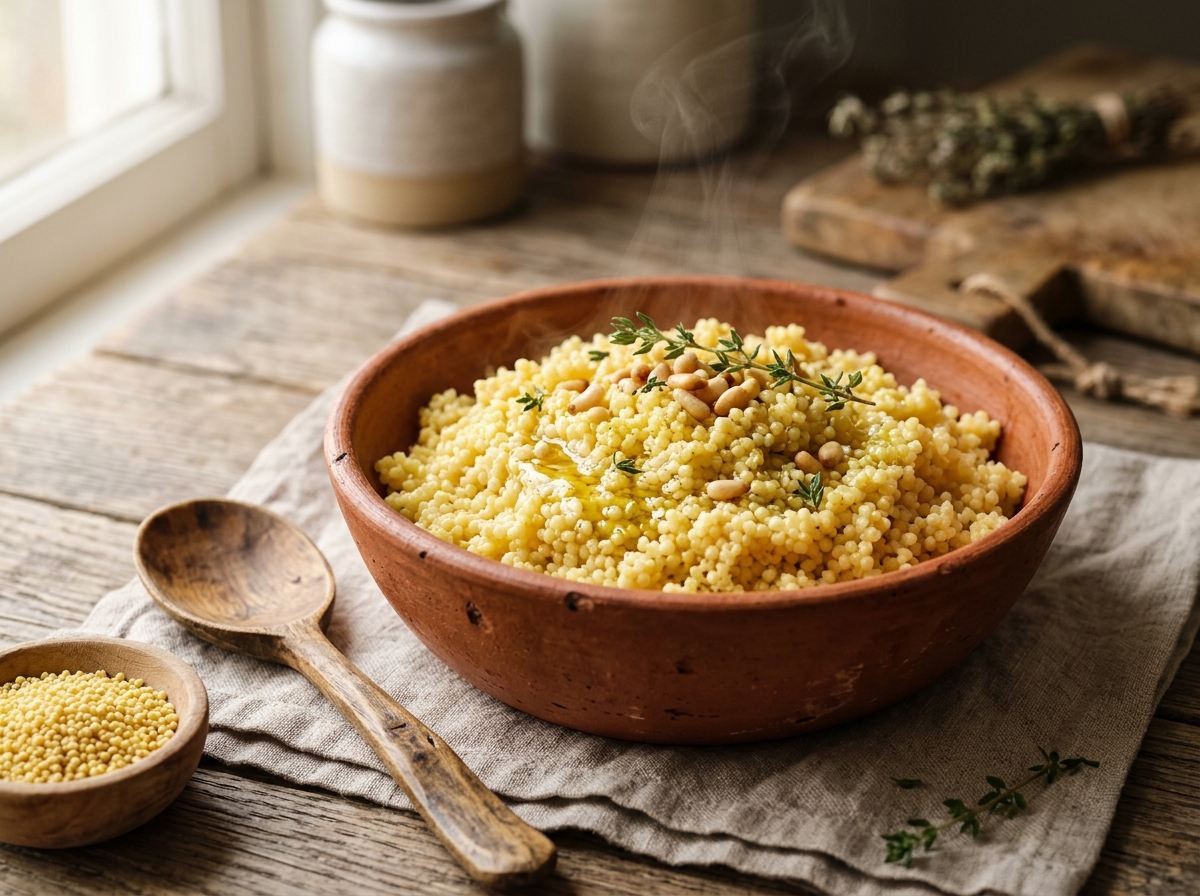
⚡ Direct Answer: How to Cook Millet (Stovetop, Pressure Cooker & Rice Cooker)
The Golden Rule for Fluffy Millet: Use 1 cup of rinsed millet to 2 cups of boiling water or broth plus ½ tsp salt and 1 tsp ghee/oil. Toast grains for 3 minutes for nutty aroma, add water, cover tightly, and simmer on lowest heat for 18–20 minutes. Remove from heat and let rest covered for 10 minutes before fluffing with a fork.
Millet is one of humanity’s oldest and most resilient ancient super-grains. Naturally 100% gluten-free, rich in prebiotic fiber, iron, calcium, and complex slow-burning carbohydrates with a low glycemic index, it is celebrated as the ultimate wholesome alternative to white rice, couscous, or pasta.
Yet, many home cooks struggle when cooking millet for the first time: it either turns out dry and birdseed-like, or collapses into an unappealing gummy porridge. The difference lies in understanding the 1:2 hydration balance, the power of dry-toasting, and the magic of the off-heat steam rest. Here is your definitive master guide to cooking any variety of millet perfectly every single time.
Master Millet Varieties & Cooking Methods Table
There are several popular millets cooked across Indian and global cuisines. While their nutritional profiles vary, they all respond wonderfully to these benchmark water ratios:
3 Ways to Cook Millet: Stovetop, Pressure Cooker, & Rice Cooker
1. Stovetop Pot Method (Classic)
Toast 1 cup rinsed millet in 1 tsp ghee/oil for 3 mins. Add 2 cups water + ½ tsp salt. Bring to rolling boil. Cover tightly with lid, reduce heat to low, and simmer for 18–20 minutes. Remove from heat and rest covered for 10 minutes. Fluff with fork.
2. Pressure Cooker Method (Fastest)
In your stovetop pressure cooker, combine 1 cup rinsed millet, 2 cups water, ½ tsp salt, and ½ tsp ghee. Close lid with weight valve. Cook on medium heat for 2 whistles. Turn off heat and allow 10 minutes natural pressure release (NPR) before opening.
3. Electric Rice Cooker Method (Hands-Free)
Place 1 cup rinsed millet, 2 cups water, salt, and oil in the inner bowl. Press the standard “White Rice” or “Cook” button. When it switches to “Keep Warm”, let steam rest for 10 minutes before opening and fluffing with a rice paddle.
Fluffy Pilaf Style vs. Creamy Porridge Style
One of the most versatile aspects of millet is that a small adjustment in liquid volume and technique completely transforms its texture:
- Fluffy Grain Texture (Rice Alternative / Salad Base): Use the 1 : 2 water ratio and dry-toast the grain first. The heat crisps the outer starch shell so grains stay distinct, tender, and separate like Moroccan couscous.
- Creamy Mash / Porridge Style (Mashed Potato or Polenta Alternative): Skip toasting. Increase the liquid to 1 : 3 or 3.5 cups of water or milk. Simmer for 25 to 30 minutes, whisking occasionally with a wooden spoon until the grains burst and turn lusciously creamy and velvety.
4 Golden Secrets to Mastering Millet
- Dry Toasting is Transformative: Raw un-toasted millet has a slightly grassy undertone. Spending 3 minutes to toast raw millet in a hot pan awakens natural nutty aromatics (resembling toasted cashews and popcorn) and seals the grains against gumminess.
- Never Stir While Simmering: Once you put the lid on the pot and lower the flame, do not stir! Stirring releases internal starches into the liquid, turning what should be fluffy grains into sticky porridge.
- The 10-Minute Off-Heat Steam Rest: Just like rice and quinoa, the magic happens after the flame is turned off. The trapped steam re-distributes through the pot, ensuring the delicate center of every tiny grain softens completely.
- Fluff with a Thin Fork: Never smash or scoop freshly cooked millet with a heavy metal spoon. Always run the tines of a fork lightly across the surface to separate the grains naturally.
Delicious Ways to Serve Cooked Millet
Fluffy golden millet absorbs gravies, curries, and dressings with incredible flavor. Here are our favorite traditional pairings from Budhi Madhi:
- With Rich Curries: Ladle the deeply spiced, caramelized gravy of our Authentic Bengali Chicken Kosha over warm foxtail or little millet for a wholesome high-fiber meal.
- With Festive Vegetables: Pair proso or kodo millet with the slow-braised sweet and spicy vegetables of Traditional Bengali Bhoger Labra.
- As a Rice Alternative: If you love our master technique for Cooking Rice in a Pressure Cooker, swapping in millet cuts the glycemic load in half while delivering comforting, hearty texture.
How to Cook Fluffy Millet (Stovetop, Pressure Cooker & Rice Cooker)
Ingredients
Core Ingredients
- 1 cup raw millet (Foxtail, Proso, Little, Kodo, or Barnyard) rinsed and drained
- 2 cups water or vegetable broth for fluffy separate pilaf; use 3 cups for creamy mash/porridge
- ½ teaspoon fine sea salt essential to bring out earthy grain flavor
- 1 teaspoon ghee, butter, or olive oil for toasting grains and ensuring separate texture
Optional Aromatics (For Herb Pilaf)
- 1 sprig fresh thyme or bay leaf simmered with liquid
- 1 tablespoon toasted pumpkin seeds or pine nuts for crunchy garnish
Instructions
Rinsing & Optional Toasting (For Nutty Flavor)
- Rinse the grain: Place 1 cup of raw millet in a fine-mesh wire strainer. Rinse thoroughly under cold running water for 30 seconds to wash away dust. Drain well.
- Toast for aroma (Recommended): Heat 1 tsp of ghee or olive oil in a medium saucepan over medium heat. Add the drained millet and toast for 3 to 4 minutes, stirring constantly, until grains smell delightfully nutty and pop lightly.
Simmering & Steaming
- Add liquid and boil: Pour in 2 cups of water or broth and ½ tsp salt. Bring to a rolling boil over high heat.
- Cover and simmer: Once boiling, immediately reduce the heat to the lowest setting. Cover tightly with a fitted lid and let simmer undisturbed for 18 to 20 minutes until all liquid is fully absorbed.
Resting & Fluffing
- Rest off heat (Crucial): Remove the pan from heat with the lid tightly on. Let it steam rest undisturbed for 10 minutes. Do not peek!
- Fluff with a fork: Remove lid and gently fluff the golden grains with a fork. Serve hot as a wholesome gluten-free alternative to rice or couscous.