Pan-seared salmon with shatteringly crispy skin and a tender, melt-in-your-mouth interior is the hallmark of great home cooking. You don’t need fancy restaurant equipment to achieve this; you only need high heat, dry fish, and proper pan patience.
The 4 Secrets to Restaurant-Quality Crispy Salmon
- Dry Fish is Non-Negotiable: Any water on the skin will boil and steam instead of fry, resulting in soggy, rubbery skin. Scrape the skin with a knife edge and dry with paper towels.
- The 80/20 Rule: Cook the salmon skin-side down for 80% of the duration (5-6 minutes). This allows the natural fat under the skin to render completely, creating a protective thermal shield that gently cooks the delicate flesh above.
- The Initial Spatula Press: When cold salmon hits hot oil, muscle fibers contract and force the fillet to arch upwards. Holding each fillet flat with a spatula for the first 10 seconds guarantees full pan contact across the entire skin surface.
- Finish with Butter Basting: Flipping to the flesh side for just 90 seconds while spooning foaming melted butter and lemon juice infuses rich flavor without drying out the center.
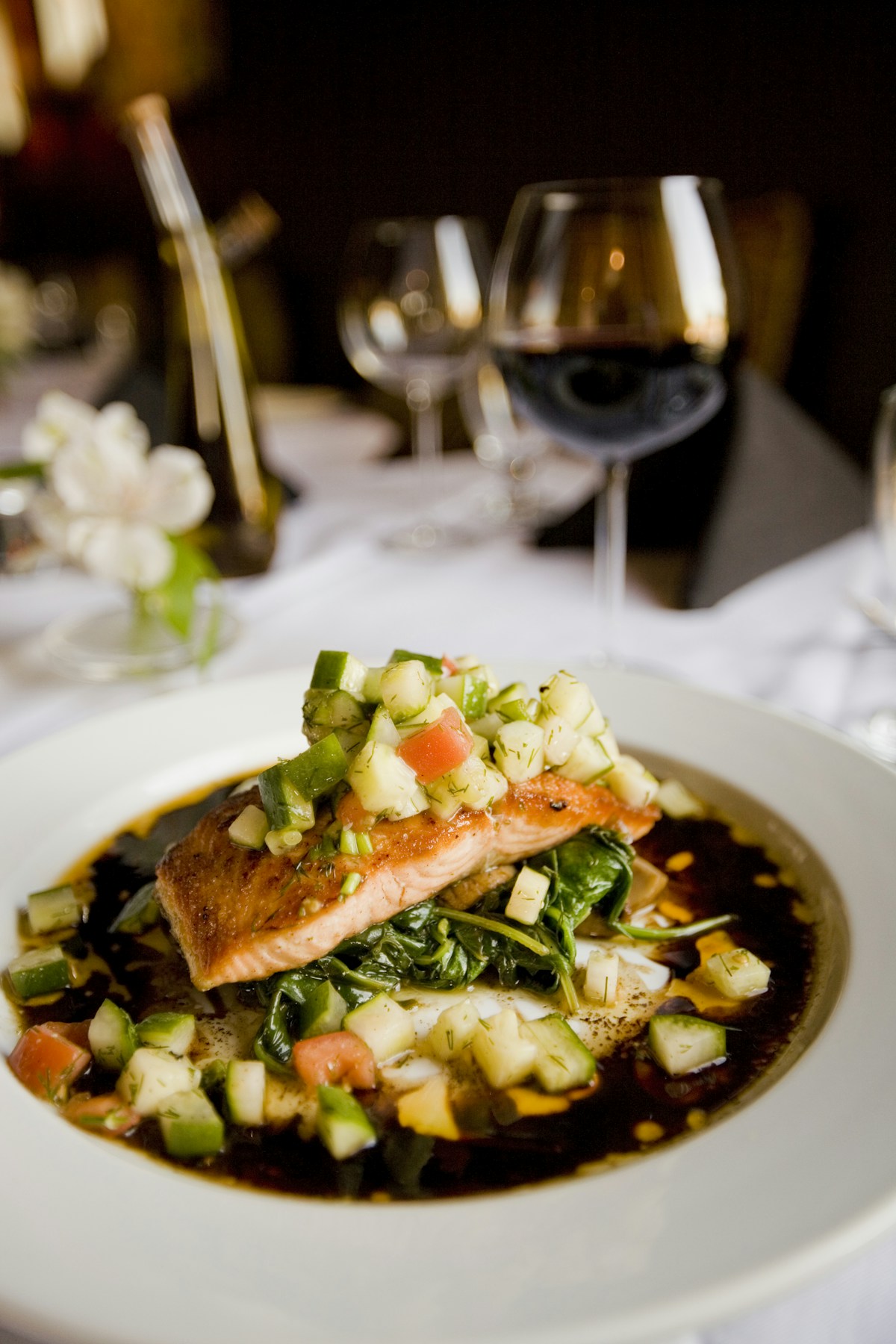
How to Cook Salmon: Restaurant-Style Crispy Skin Pan-Seared Salmon
Ingredients
Method
- Take salmon fillets out of the refrigerator 15 minutes before cooking so they reach room temperature. Cold fish drops skillet temperature and causes sticking.
- Pat fillets thoroughly dry on both sides with paper towels. Use the back of a chef knife to scrape excess moisture off the skin side and pat dry again.
- Season the flesh side generously with kosher salt, cracked black pepper, and garlic powder. Season the skin lightly with salt.
- Heat avocado oil in a stainless steel or heavy cast-iron skillet over medium-high heat until shimmering and almost smoking.
- Carefully lay salmon fillets skin-side down, away from you to prevent oil splatter. Immediately press down gently on each fillet with a flexible fish spatula for 10 seconds to prevent the skin from curling.
- Cook undisturbed skin-side down for 5 to 6 minutes (about 80% of total cooking time) until the skin is golden brown and crackling-crisp, and the flesh has turned opaque halfway up the sides.
- Carefully flip onto the flesh side. Add unsalted butter and lemon juice to the pan, baste the fillets with the foaming butter for 1.5 to 2 minutes until internal temperature hits 125°F – 130°F (52°C – 54°C) for medium tender flakiness.
- Transfer immediately to warm plates skin-side up to maintain crispiness, garnish with fresh dill, and serve.
Frequently Asked Questions about how to cook salmon
How do you prevent salmon skin from sticking to the pan?
Three rules prevent sticking: 1) Ensure the skin is completely dry with paper towels, 2) Get the pan and oil shimmering-hot before adding the fish, and 3) Do not try to move or flip the salmon too early. Once the skin caramelizes and crisps, it releases naturally from the pan surface.
What is the white stuff (albumin) that oozes out of cooked salmon?
The white substance is albumin, a harmless liquid protein that coagulates when salmon muscle fibers contract under heat. While completely safe to eat, excessive albumin indicates the salmon is cooking too fast or is being overcooked.
What is the best internal temperature for cooked salmon?
For tender, succulent, buttery salmon, aim for 125°F to 130°F (medium-rare to medium). The USDA recommends 145°F (63°C), but cooking to 145°F on direct heat often makes salmon chalky and dry.
Can I bake salmon in the oven using this same seasoning?
Yes! To bake salmon in the oven, preheat to 400°F (200°C), place seasoned fillets skin-side down on a parchment-lined baking sheet, and bake for 12 to 15 minutes until flaky.