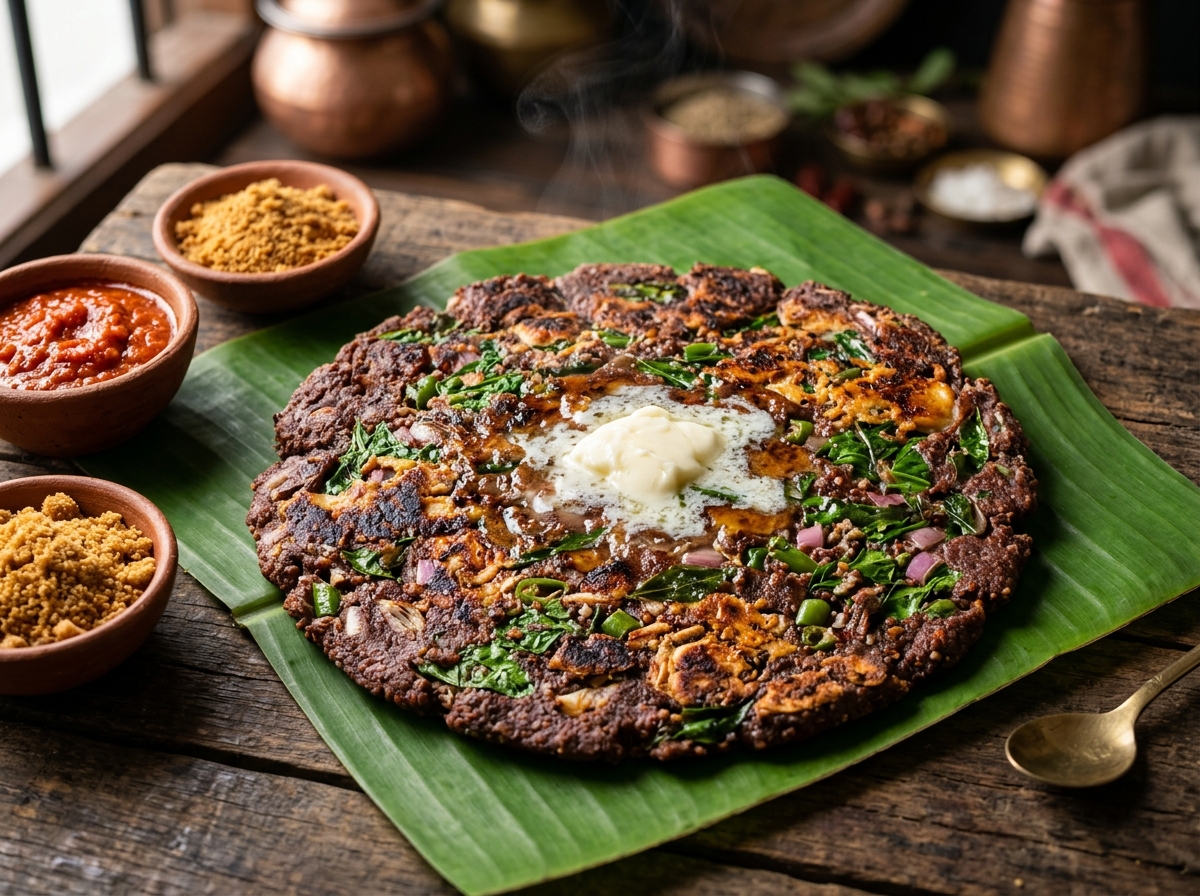
⚡ Direct Answer: How to Make Soft Kevuru Maavu Adai (Cheat Sheet)
The Anti-Cracking Secret: Knead 2 cups Ragi Flour with warm water, 1 cup cleaned drumstick leaves (murungai keerai), 1 cup chopped sambar shallots, ⅓ cup grated coconut, and 1 tbsp sesame oil into a soft, supple dough. Pat onto a greased banana leaf with wet fingers. Poke 3 vent holes in center. Roast on a hot cast-iron tawa with sesame oil covered for 2 mins, flip and crisp for 2 mins.
Travel through the rural heartlands of Tamil Nadu — from the fertile fields of Thanjavur to the rugged kitchens of Kongu Nadu — and you will find an ancient culinary ritual alive at dawn: iron tawas glowing red over open wood fires, releasing the earthy aroma of roasted finger millet and fragrant sesame oil. This is Kevuru Maavu Adai (also celebrated as Ragi Adai or Kezhvaragu Adai).
More than just a flatbread, this is an artisanal rustic feast. Hand-patted on glistening green plantain leaves, studded with jewel-like sambar shallots, sweet flakes of coconut, fiery green chilies, and iron-dense drumstick leaves (murungai keerai), each adai has a crisp outer crust and a wonderfully tender, moist center that melts in your mouth when paired with fresh country butter or spicy garlic tomato chutney.
Why Do Most Ragi Adais Turn Out Hard and Brittle?
Because finger millet is completely gluten-free, it lacks the glutenin-gliadin protein complex that allows wheat dough to stretch. When home cooks use cold tap water, the starch molecules remain unhydrated, causing the edges to tear and crumble during patting, and the flatbread to turn dry as leather on the tawa.
Here are the three foundational rules that guarantee your Kevuru Maavu Adai remains soft for hours:
- Warm Water Pre-Gelatinization: Pouring warm or hot water over ragi flour triggers immediate gelatinization of amylopectin starches. This forms a natural, elastic gel that binds the dough together seamlessly without a single crumb breaking.
- The Moisture Anchors (Shallots & Coconut): Finely chopped sambar shallots (small onions) release natural moisture while cooking, caramelizing slightly and perfuming the bread from within. Grated coconut adds wholesome fat droplets that prevent the millet starch from drying out.
- The 3-Vent Center Holes: Poking 3 to 4 holes with your finger through the adai is an ingenious traditional technique. It allows steam to escape without puffing the bread unevenly, while letting drops of sesame oil seep right into the center of the dough for uniform crispness.
The Iron & Calcium Nutritional Powerhouse
In traditional Siddha and Tamil folk medicine, combining Kezhvaragu (ragi) with Murungai Keerai (moringa / drumstick leaves) is the ultimate prescribed remedy for fatigue and anemia:
Did You Know? Moringa leaves contain 25 times more iron than spinach and 7 times more vitamin C than oranges. The vitamin C in moringa acts as an organic bioavailability booster, allowing your body to absorb the massive calcium and plant-based iron from finger millet at maximum metabolic efficiency!

Authentic Kevuru Maavu Adai Recipe (Spicy Ragi Roti with Drumstick Leaves)
Ingredients
Ragi Dough Base
- 2 cups ragi flour (kezhvaragu / finger millet flour) fresh, 250g
- 1 cup warm water approx. 200-240ml, as needed to knead into soft, pliable dough
- 1 teaspoon salt or to taste
- 1 tablespoon sesame oil (nallennai) added while kneading for extreme softness
Aromatics & Moringa Greens
- 1 cup fresh drumstick leaves (murungai keerai) thoroughly washed, stems discarded
- 1 cup sambar shallots (small onions / chinna vengayam) finely chopped (sweetness & aroma)
- 2 to 3 medium green chilies finely chopped
- 1 teaspoon cumin seeds (jeera) lightly bruised
- ⅓ cup fresh grated coconut keeps the interior moist and soft
- ¼ teaspoon asafoetida (hing) for digestion and flavor
- 2 to 3 tablespoons sesame oil or ghee for cooking on the tawa
Instructions
Sautéing Greens & Aromatics (Optional Flavor Boost)
- In a small pan, heat 1 tsp sesame oil. Add chopped shallots, green chilies, and cumin seeds. Sauté for 2 minutes until translucent.
- Add the cleaned drumstick leaves (murungai keerai) and sauté on medium heat for 1 to 2 minutes until just wilted. Remove from heat and let cool. (Note: You can also mix them raw into the flour, but a quick sauté removes any mild bitterness and makes the adai exceptionally fragrant!)
Kneading Soft Non-Cracking Dough
- In a wide mixing bowl, add 2 cups ragi flour, salt, grated coconut, asafoetida, and the sautéed shallot-drumstick leaf mixture.
- Mix together dry ingredients with your fingers to evenly distribute the aromatics.
- Gradually pour in warm water (about 1 cup) while kneading. Knead into a soft, smooth, non-sticky dough resembling soft chapati dough. Drizzle 1 tbsp sesame oil over the surface and let rest covered for 10 minutes.
Patting & Roasting to Perfection
- Divide the dough into 6 equal smooth balls. Place a greased banana leaf, parchment paper, or ziplock sheet on your kitchen counter.
- Place one dough ball on the sheet. Wet your fingers with water and pat the dough evenly into a round disc of about 6 to 7 inches in diameter and ¼-inch thickness. Make 3 to 4 small holes in the center of the adai with your fingertip (this allows steam and oil to circulate for uniform cooking).
- Heat a heavy cast-iron tawa over medium heat and grease with a few drops of sesame oil. Carefully invert the leaf/parchment onto the hot tawa and peel the sheet away gently.
- Drizzle ½ tsp sesame oil or ghee around the perimeter and a few drops inside each center hole. Cover with a lid and cook on medium flame for 2 to 3 minutes.
- Flip the adai, drizzle a few drops of oil on the other side, and press gently with a flat spatula. Cook uncovered for another 2 minutes until brown toasted spots appear and edges turn crisp.
- Serve piping hot with a dollop of fresh homemade white butter (vennai), country jaggery (nattu sakkarai), or tangy tomato-garlic kara chutney!
Traditional Accompaniments: How to Serve Kevuru Maavu Adai
In rural Tamil kitchens, Kevuru Maavu Adai is served with two contrasting accompaniments on the same banana leaf:
- The Sweet Traditional Way: A dollop of fresh, unsalted homemade white butter (vennai) alongside a spoonful of powdered organic country jaggery (nattu sakkarai). The hot adai melts the butter instantly, melding with the sweet jaggery for divine rustic indulgence.
- The Savory Rustic Way: Tangy, fiery Poondu Kara Chutney (garlic tomato chili chutney) or a bowl of piping hot sambar enriched with shallots and drumsticks.
Frequently Asked Questions about Kevuru Maavu Adai
What is Kevuru Maavu?
Kevuru Maavu (also spelled Kezhvaragu Maavu) is the authentic regional Tamil term for finger millet flour (ragi flour). In rural Tamil Nadu, Kevuru Maavu Adai refers to thick, rustic savory flatbreads patted by hand and roasted on a traditional tawa.
How do you prevent Ragi Adai from cracking while patting?
Ragi flour lacks gluten, which causes cracks if kneaded with cold water. To prevent cracking: always knead the dough with warm or hot water, incorporate fresh grated coconut and a tablespoon of sesame oil to add elasticity, and wet your fingertips periodically with water while patting.
Why are drumstick leaves (murungai keerai) added to Ragi Adai?
Drumstick leaves (moringa) and ragi form a traditional nutritional powerhouse. Moringa leaves are exceptionally rich in iron, vitamin C, and antioxidants, perfectly complementing the calcium and fiber of ragi while lending a wonderful peppery, earthy flavor.
Can I make Ragi Adai without drumstick leaves?
Yes! If fresh drumstick leaves are unavailable, you can substitute them with finely shredded methi leaves (fenugreek leaves), baby spinach (palak), grated carrots, or simply prepare the adai with extra shallots and fresh coriander.
2 thoughts on “Authentic Kevuru Maavu Adai Recipe (Spicy Ragi Roti with Drumstick Leaves)”
Comments are closed.